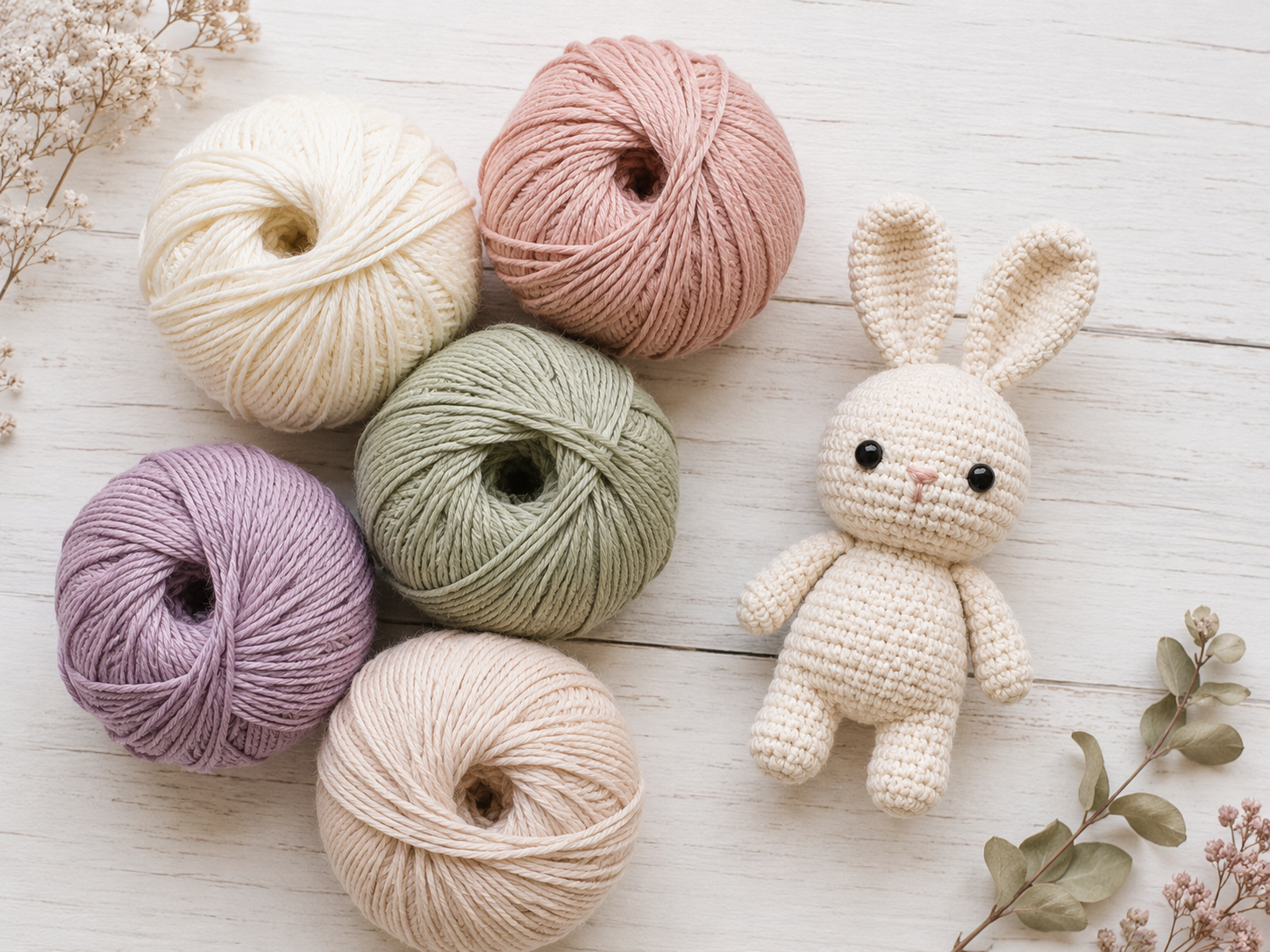
Of all the decisions you'll make as an amigurumi maker, choosing the right yarn has the biggest impact on how your finished toy looks and feels. The wrong yarn leads to gaps that show the stuffing, a fabric that's too stiff or too floppy, colours that bleed or fade, and tiny fibres that pill up after just a few weeks. The right yarn, on the other hand, makes crocheting a pleasure and produces a neat, firm, beautiful result — almost regardless of skill level.
This guide covers everything you need to know: fibre types, yarn weights, what to look for on the label, and the specific brands I return to again and again.
The Golden Rule: Go Tight
Before we talk about fibre or brand, let's establish the single most important principle of amigurumi yarn choice: your fabric needs to be tight enough that you cannot see through it. Hold your crocheted swatch up to a light source. If light passes through the stitches, the stuffing will show — and no amount of careful finishing will fix that.
This means using a hook that's one or two sizes smaller than the yarn manufacturer recommends. A yarn labelled for a 4mm hook might work beautifully on a 3mm or 3.5mm hook for amigurumi purposes. The resulting fabric will feel a little stiff to work with at first, but that firmness is exactly what you want once the piece is stuffed and sitting on a shelf.
Cotton vs. Acrylic: The Big Debate
This is the question I get asked most often, and the honest answer is: both work well, and the best choice depends on your priorities.
Cotton Yarn
Cotton is the traditional choice for amigurumi, especially in Japan where the craft originated. It has a crisp, clear stitch definition — every single stitch is visible and neat — and it holds its shape extremely well after stuffing. It doesn't stretch much, which means your finished toy won't sag or distort over time.
The downsides: cotton is less forgiving to work with. It has almost no elasticity, so it can feel harder on your hands during a long crocheting session. It also tends to cost a little more than acrylic, and the colour range for good amigurumi cotton can be more limited depending on your local shop.
Best for: Makers who want crisp stitch definition, heirloom-quality toys, or projects that will be washed frequently.
Acrylic Yarn
Acrylic has become my everyday go-to for amigurumi, and I don't say that reluctantly. Modern acrylic yarns — particularly the anti-pilling varieties — are soft, come in an enormous range of colours, are machine washable, and are widely available at very reasonable prices. They have a slight stretch that makes the stitches easier to work into, which beginners often find less tiring.
The weakness of cheap acrylic is pilling: those tiny fuzzy bobbles that form on the surface after handling. This is why I always recommend anti-pilling acrylic specifically for amigurumi. It costs only slightly more and makes a significant difference to how your toy looks six months down the line.
Best for: Beginners, everyday projects, makers on a budget, anyone who needs a vast colour selection.
Cotton-Acrylic Blends
Blended yarns try to give you the best of both worlds — the stitch definition of cotton with the softness and stretch of acrylic. In practice, the balance varies hugely between brands. When a blend works, it really works. It's worth experimenting once you're comfortable with the basics.
Yarn Weight: What Number to Choose
Amigurumi can technically be made in almost any weight, but most patterns — including all of mine — are designed for DK weight (weight 3). Here's a quick overview of the most common weights:
DK Weight (Light Worsted / Weight 3)
The sweet spot for amigurumi. Creates a toy that's substantial enough to handle easily — typically between 10cm and 20cm tall — without being too heavy or using enormous amounts of yarn. Most amigurumi patterns worldwide are written for DK weight. Paired with a 3mm hook, DK yarn produces a beautifully tight, smooth fabric.
Worsted Weight (Weight 4)
Makes larger toys, works up faster, and is easier to see for beginners. Great for bigger amigurumi (20cm+). The fabric can sometimes feel a little looser at a given hook size, so be especially careful to size down your hook. Worsted is widely available everywhere and often cheaper per skein than DK.
Fingering / Sock Weight (Weight 1–2)
Produces tiny, delicate amigurumi — think miniatures under 8cm. Beautiful results but slow to work and harder on the eyes. Not recommended for beginners. Only attempt fingering weight once you're confident with the basic technique.
My Top Yarn Recommendations
These are the yarns I actually use and recommend — not based on sponsorship, but on the results I've seen in my own finished toys.
Paintbox Simply DK — Best Budget Pick
Paintbox Simply DK is my absolute workhorse yarn. It's a 100% acrylic anti-pilling DK weight that comes in over 50 colours, has excellent stitch definition for an acrylic, is machine washable, and costs very little per 100g ball. The colour range covers everything from classic naturals to vivid brights. If you're just starting out, this is the yarn I'd recommend buying first.
Drops Safran — Best Cotton Option
If you want to work with cotton, Drops Safran is a reliable, reasonably priced 100% cotton fingering-to-DK weight yarn with a lovely matte finish. The stitch definition is beautiful and the colour range is solid. It's slightly thinner than typical DK so pair it with a 2.5mm–3mm hook for best results.
Scheepjes Catona — Premium Cotton Choice
Scheepjes Catona is a beloved cotton yarn in the amigurumi community, and for good reason. The colour palette is extraordinary — over 100 shades, including gorgeous gradient sets. The yarn is smooth, consistent, and produces impeccable stitch definition. It's pricier than the other options but worth it for special projects or detailed colourwork.
Lion Brand Vanna's Choice — US Workhorse
If you're in the US, Vanna's Choice is one of the most widely available amigurumi-friendly yarns. It's a worsted weight acrylic with a smooth finish, good stitch definition, and it's machine washable. The large skein size is also great value for bigger projects.
What to Avoid
A few yarn types that sound appealing but tend to disappoint in practice:
- Fluffy or fuzzy yarns (mohair, bouclé): The texture hides your stitches, making it nearly impossible to count rounds or see where to insert your hook. Save these for scarves.
- Cheap non-anti-pilling acrylic: Will look tired and bobbly within weeks of the toy being handled. Always check the label for anti-pill treatment.
- Very stretchy yarns: High-stretch yarns (some jersey-style or bamboo blends) distort easily under the pressure of stuffing. Your finished shape will be unpredictable.
- Multi-colour variegated yarns: These can be beautiful in theory but often obscure the stitch definition that makes amigurumi so satisfying. For your first projects, stick to solid colours.
A Note on Colour
Lighter colours show stitch definition most clearly — perfect for learning and for photographs. Darker colours, especially very dark navy or black, can be genuinely difficult to crochet because it's hard to see the individual stitches. If you must use dark colours, try working near a bright daylight lamp, or use a stitch marker in every round to track your progress.
Quick Summary
- ✅ Go tight: always use a smaller hook than the yarn label suggests
- ✅ DK weight is the most versatile choice for most patterns
- ✅ Anti-pilling acrylic is the best all-round option for beginners
- ✅ Paintbox Simply DK is my top recommendation for everyday amigurumi
- ✅ Scheepjes Catona is the premium choice for special projects
- ❌ Avoid fluffy, stretchy, or variegated yarns for amigurumi
Ready to start crocheting? Head to the Complete Beginner's Guide to learn the stitches, or browse the pattern shop for your first project.